WebGPU Compute
by Kenwright
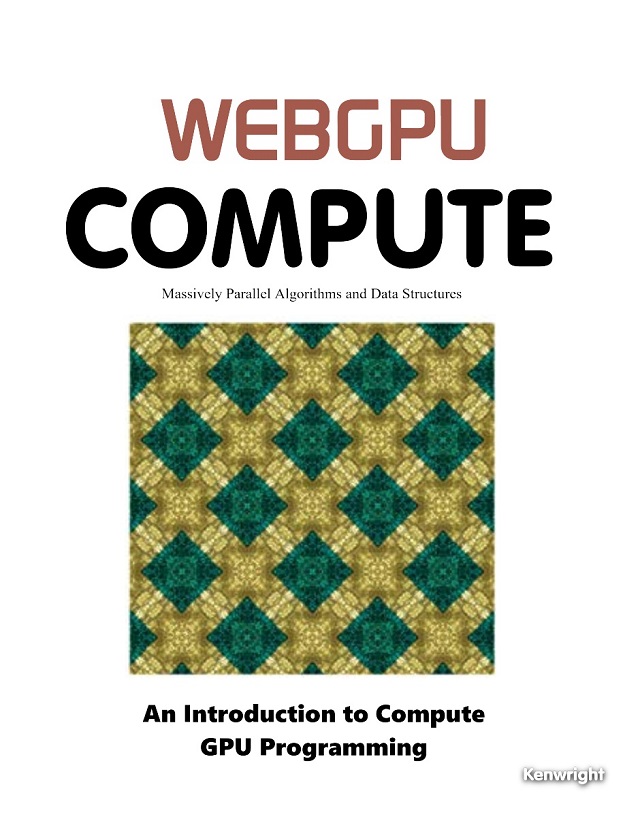
WebGPU Compute is a practical guide dedicated to the field of WGSL compute algorithms. As we stand on the cusp of a new era in web-based computation, this book aims to illuminate the path forward, providing both foundational knowledge and advanced techniques in the realm of compute shaders. WebGPU is the latest API designed to bring high-performance computing capabilities to the web. It offers a modern, low-level interface for GPU programming, allowing developers to leverage the full power of contemporary graphics hardware for general-purpose computation. This book zeroes in on the compute capabilities of WebGPU, a pivotal feature that opens up new possibilities for intensive computational tasks directly in the browser. Compute shaders represent a significant evolution in GPU programming. Unlike traditional graphics shaders that are primarily concerned with rendering images, compute shaders focus on performing general-purpose computations. This flexibility enables a wide array of applications beyond graphics, such as scientific simulations, data analysis, image processing, and even sound processing. This book is structured to guide you through the essentials of WebGPU compute shaders and their practical applications. Each chapter is filled with detailed explanations, step-by-step tutorials, and numerous code examples to help you gain a deep understanding of both the theoretical and practical aspects of compute shaders. Topics Include: 1. Fundamental Principles of Compute Shaders: - Understanding the architecture and capabilities of WebGPU. - Writing your first compute shader. - Managing resources and memory in GPU programs. 2. Image Processing: - Implementing filters and transformations. - Real-time image enhancement techniques. 3. Simulations: - Creating particle systems and physics simulations. - Modeling natural phenomena using compute shaders. 4. Fractals: - Generating complex fractal images. - Exploring mathematical beauty through GPU computation. 5. Sound Processing: - Utilizing compute shaders for audio synthesis and processing. - Real-time sound effect generation. 6. Sorting Algorithms: - Implementing parallel sorting techniques. - Optimizing performance for large datasets. 7. Steganography: - Hiding and extracting data within images using compute shaders. - Exploring the intersection of security and graphics. The examples provided throughout this book are designed to be both educational and practical. Each example builds upon the previous ones, gradually increasing in complexity and depth. By the end of this book, you will not only have a strong grasp of WebGPU compute shaders but also a toolkit of techniques and examples that you can apply to your own projects.
| Publisher | Independently published |
|---|---|
| Publication date | May 29, 2024 |
| Pages | 398 pages |
| Language | English |
| ISBN | 9798326959423 |
| ASIN | B0D5LMJ99Q |
What you get from it
- Master practical coding skills.
- Explore real-world projects.
- Accelerate your learning curve.
- Demystify advanced technical topics.
Full synopsis
WebGPU Compute offers a comprehensive and in-depth guide that walks you through the concepts, applications, and best practices. With a strong focus on hands-on examples and real-world relevance, it empowers you to not just learn the theory but to apply it in meaningful ways across graphics, compute, and more.A worthwhile read
Rating: 4
— The Institute