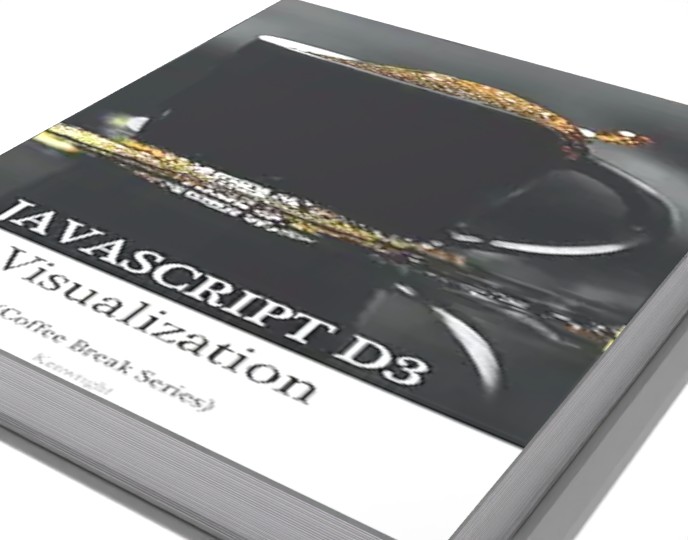
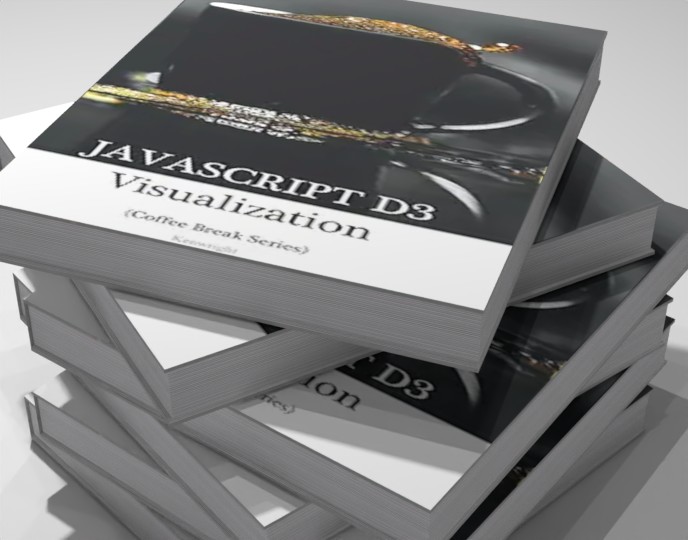

D3 An Introduction (Coffee Book)
by Kenwright
D3 (or D3.JS) is a powerful JavaScript Framework for developing eye-catching interactive visualisation solutions within any compatible web browser (without the use of plug-ins). This incredible framework is free and open-source and is able to run on nearly every modern browser today - allowing you to communicate and visualize graphics in ways that were previously not possible. This book introducing the reader (you) to the D3 framework - including simple explanations and practical examples. Don't have much time? Get up to speed fast on the essentials of the D3 Framework with this 20 Minute Coffee Break Series. Whether you need a crash course or a brief refresher, this book gives a concise, practical guide that will help bring you up to speed on the basic principles. Facts and samples that you can quickly read and apply, for ambitious professionals and hobbyists.
| Publisher | Independently published |
|---|---|
| Publication date | August 6, 2021 |
| Pages | 110 pages |
| Language | English |
| ISBN | 9798451313169 |
| ASIN | B09CG94S6M |
What you get from it
- Master practical coding skills.
- Explore real-world projects.
- Accelerate your learning curve.
- Demystify advanced technical topics.
Full synopsis
D3 An Introduction (Coffee Book) offers a comprehensive and in-depth guide that walks you through the concepts, applications, and best practices. With a strong focus on hands-on examples and real-world relevance, it empowers you to not just learn the theory but to apply it in meaningful ways across graphics, compute, and more.Outstanding introduction
Rating: 5
— The Institute