Game Design · Interactive Media · Game Development
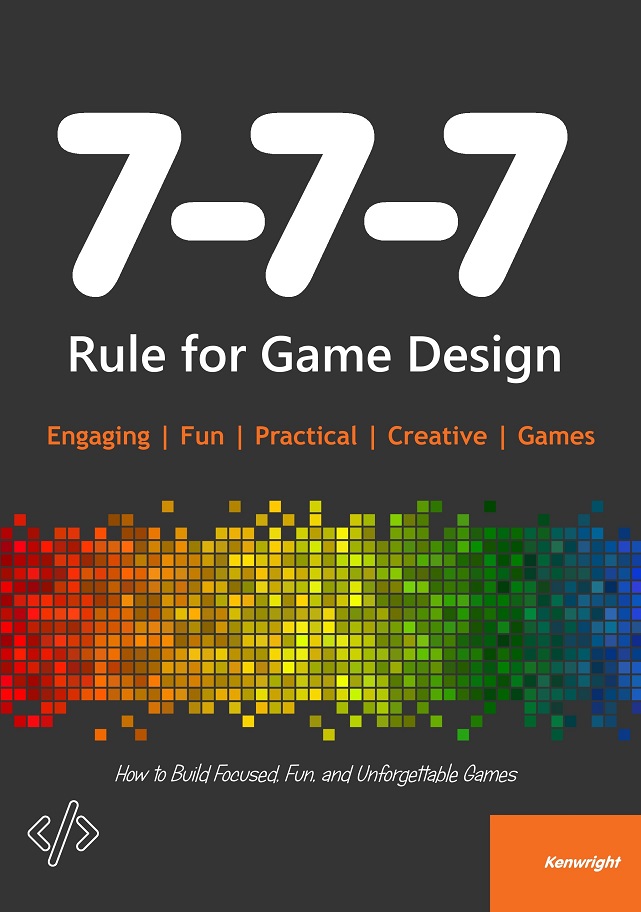
7-7-7 Rule for Game Design (Paperback)
by Kenwright
The 7‑7‑7 Rule for Game Design introduces a simple yet powerful framework that helps creators structure mechanics, pacing, and player engagement. Breaking design challenges into clear, manageable layers, the book empowers both beginners and experienced developers to craft games that feel focused, fun, and deeply playable.
| Publisher |
Published |
| Publication date |
2026 |
| Pages |
184 |
| Language |
English |
| ISBN |
9798242302839 |
| ASIN |
B0GDVMMK8V |
What you get from it
- Learn a clear framework for structuring game ideas.
- Improve your ability to design engaging gameplay loops.
- Develop stronger decision‑making skills in the design process.
- Gain confidence through practical, repeatable design methods.
Full synopsis
The 7‑7‑7 Rule for Game Design breaks down the creative process into three simple layers that help designers focus on what truly matters: player goals, core mechanics, and moment‑to‑moment engagement. Through examples, exercises, and real‑world insights, the book shows how constraints can unlock creativity and lead to more polished, intentional game experiences. Whether you're prototyping your first idea or refining a complex system, the 7‑7‑7 rule offers a reliable guide for making design decisions that feel purposeful and player‑centered.
The Institute's review
Good, but not for absolute beginners
Rating: 4
I came to this book already familiar with the basics, and it still had plenty to offer. There is a section near the end that ties several earlier ideas together in a way I had not seen before. I appreciated the honesty about what the book does not cover — it saved me from expecting things that were not there. It is denser than the page count suggests, and I found myself slowing down around the middle. Four stars, and I suspect a second edition could easily push it to five.
— The Institute
Related
If you liked this, try